ENS for Puppies: Early Neurologic Stimulation for Miniature Poodle and Mini Goldendoodle Puppies
As a responsible breeder of Miniature Poodles and Mini Goldendoodles, my goal is not just to produce beautiful puppies, but to raise puppies that are confident, strong, healthy, and prepared for life as loved family companions. One of the most important tools I use during the earliest days of a puppy’s life is ENS for puppies, formally known as Early Neurologic Stimulation and sometimes referred to as Bio Sensor.
If you’ve never heard of Early Neurologic Stimulation before, you’re not alone. Many people are unfamiliar with what happens during the first two weeks of a puppy’s life, yet this short window plays a powerful role in shaping temperament, stress tolerance, and long term well being. Below I’ll explain exactly what ENS is, why it matters, how I use it with my Miniature Poodle and Mini Goldendoodle puppies, and how it benefits you and your future puppy.
What Is ENS for Puppies?
ENS for puppies (Early Neurologic Stimulation) is a series of gentle, carefully timed exercises performed on puppies during the first 3 to 16 days of life. This period is known as the neonatal stage. This is when a puppy’s neurological system is developing rapidly.
ENS was originally developed through research conducted by the U.S. military’s canine program. They discovered that mild, controlled stressors introduced very early in life led to adult dogs that were:
- More resilient under stress
- Better problem solvers
- More confident in new environments
- Stronger physically
- More adaptable to change
These findings have since been embraced by ethical, science based breeders who prioritize temperament and long term quality of life.
Why ENS for Puppies Starts in the First Two Weeks of Life
During the first two weeks of life puppies are unable to see or hear. Their world revolves around warmth, touch, and scent. While this may seem like a fragile time, and it is. It is also a once‑in‑a‑lifetime developmental window.
At this stage:
- The nervous system is forming rapidly
- The stress response system is being programmed
- The brain is highly adaptable
When ENS is done correctly, it gently challenges the puppy’s nervous system in a safe way. These small challenges help the body learn how to respond to stress appropriately later in life.
Once this window closes it cannot be recreated. That’s why ENS must be done early, consistently, and with great care.
We also do ESI (early scent introduction) in the first few weeks of a puppies life. Click here to find out about early scent introduction how it enhances the development of our puppies.
How I Perform ENS for Puppies
I personally perform ENS exercises with each puppy, one on one, every day during the appropriate age window. Each session is short, and typically lasting less than one minute per puppy, but the impact is significant.
The Five ENS for Puppies Exercises I Use
ENS consists of five specific exercises, each designed to stimulate the neurological system in a different way: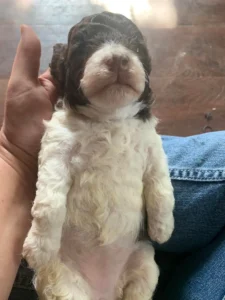
- Tactile stimulation – Gently stimulating the space between the toes using a soft touch
- Head held erect – Holding the puppy upright with head above tail
- Head pointed down – Holding the puppy gently with head below the tail
- Supine position – Holding the puppy on its back, cradled in my hands
- Thermal stimulation – Briefly placing the puppy on a cool surface
Each exercise lasts only 3–5 seconds and is never forced. Puppies are closely monitored for signs of stress, and safety and comfort always come first.
Is ENS for Puppies Safe?
Yes, when done correctly by an experienced, knowledgeable breeder, ENS is very safe. The stress introduced is mild and controlled, similar to the natural stress puppies would experience if raised in a stimulating environment.
ENS should never:
- Cause pain
- Frighten the puppy
- Be rushed or extended beyond the recommended time
Because I raise my puppies in my home, I am able to observe them constantly and adjust their care based on each puppy’s individual response.
The Benefits of ENS for Puppies
ENS is not about creating “super dogs.” It’s about giving puppies a better foundation for life. The benefits are subtle at first but become more evident as puppies mature.
1. Improved Stress Tolerance
Puppies who receive ENS tend to handle stress more effectively as they grow. This includes:
- Vet visits
- Grooming appointments
- Travel
- Loud or unfamiliar environments
- Changes in routine
For breeds like Miniature Poodles and Mini Goldendoodles, who are intelligent and emotionally sensitive, this is especially valuable.
2. Increased Confidence
ENS helps puppies develop confidence from the inside out. Confident puppies are more likely to:
- Explore new environments willingly
- Recover quickly from startle responses
- Adapt to new people and situations
This often translates into easier transitions when puppies go to their new homes.
3. Better Problem Solving Skills
Studies have shown that dogs exposed to early neurological challenges demonstrate improved problem solving abilities later in life. For highly intelligent breeds like Poodles and Goldendoodles, this means:
- Easier training
- Faster learning
- Greater engagement with enrichment activities
4. Stronger Cardiovascular and Immune Systems
ENS has been linked to improved physiological development, including:
- Stronger heart function
- Enhanced adrenal response
- Better overall resilience
While ENS is not a replacement for proper nutrition, veterinary care, or genetics, it complements all of these factors beautifully.
How ENS for Puppies Fits Into My Overall Puppy Raising Program
Early Neurologic Stimulation is just one piece of how I raise my puppies, but it sets the tone for everything that follows.
ENS works best when combined with:
- Home raised puppies exposed to normal household sounds
- Gentle daily handling
- A clean, enriched whelping environment
- Careful observation of temperament
- Ongoing age appropriate socialization
By starting early, I’m able to build layer upon layer of positive experiences as puppies grow.
What ENS for Puppies Does Not Do
It’s important to be honest about what ENS can and cannot do.
ENS does not:
- Replace good genetics
- Guarantee a specific personality
- Eliminate the need for training and socialization
- Turn every puppy into a service dog
Instead, ENS gives puppies a stronger starting point, making it easier for them to thrive with the right guidance and care.
Why ENS for Puppies Matters to You as a Puppy Buyer
When you choose a puppy from me, you’re not just choosing a breed, you’re choosing a foundation.
ENS helps ensure that your puppy:
- Handles life changes more smoothly
- Is emotionally resilient
- Is easier to train and manage
- Has been thoughtfully prepared from day one
This often results in fewer behavioral challenges, smoother transitions, and a more enjoyable bonding experience.
ENS for Puppies: An Early Investment With Lifelong Impact
The first two weeks of a puppy’s life may be short, but they are incredibly powerful. Early Neurologic Stimulation is one of the ways I honor that time and invest intentionally in each puppy’s future.
As a breeder of Miniature Poodles and Mini Goldendoodles, I believe ethical breeding means combining health testing, sound temperament, and intentional early development practices. ENS is a reflection of that commitment.
When you bring one of my puppies home, you’re welcoming a dog who has been nurtured not just physically, but neurologically and emotionally as well.
If you have questions about ENS For Puppies, or any part of my puppy raising program, I’m always happy to talk about it. Education and transparency are important to me, and I believe informed puppy buyers make the best lifelong homes.
Follow the links for more information how be raise our puppies:
Sound Desensitization For Puppies
ENS for Puppies: Frequently Asked Questions
What age is ENS for puppies done?
ENS for puppies is performed during a very specific developmental window, typically between 3 and 16 days of age. This is the only time in a puppy’s life when these exercises can create neurological benefits.
Does ENS replace socialization or training?
No. ENS for puppies is the foundation, not the finish line. Proper socialization, positive training, and continued exposure to the world are still essential as puppies grow.
Will Early Neurologic Stimulation change my puppy’s personality?
ENS does not change who a puppy is at their core. Instead, it helps puppies respond to stress more effectively and adapt more easily to new situations.
Is ENS only for working dogs?
Not at all. While ENS began in working dog programs, family companions—including Miniature Poodles and Mini Goldendoodles—benefit greatly from improved confidence and resilience.
Can ENS be done incorrectly?
Yes. ENS should only be performed by knowledgeable breeders who understand proper timing, duration, and handling. Incorrect application can overwhelm puppies, which is why experience and observation are critical.
ENS for Puppies: A Commitment to Thoughtful Breeding
ENS for puppies reflects my commitment to ethical breeding, intentional early development, and transparency with puppy families. By investing in puppies during their earliest days, I am helping set the stage for confident, adaptable, and well rounded companions who thrive in their new homes. If you have any questions about early neurologic stimulation or about our program, contact us here.
View our Mini Goldendoodle puppies